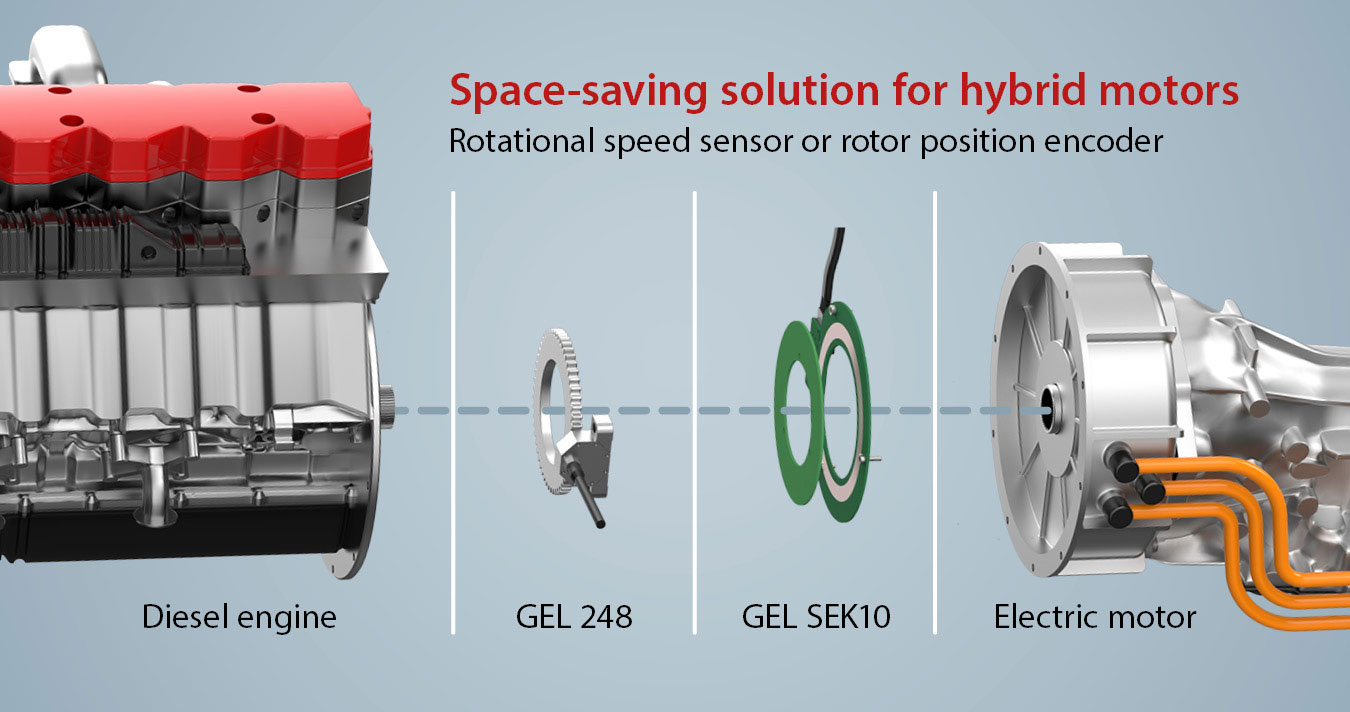
Why the interaction of speed detection and rotor position sensing is critical in hybrid drives
In hybrid drives, the engine speed sensing of the combustion engine and the rotor position sensing of the electric motor work closely together to enable a seamless transition between both drive sources. The engine speed sensor precisely captures the crankshaft speed and thus the operating state of the combustion engine.
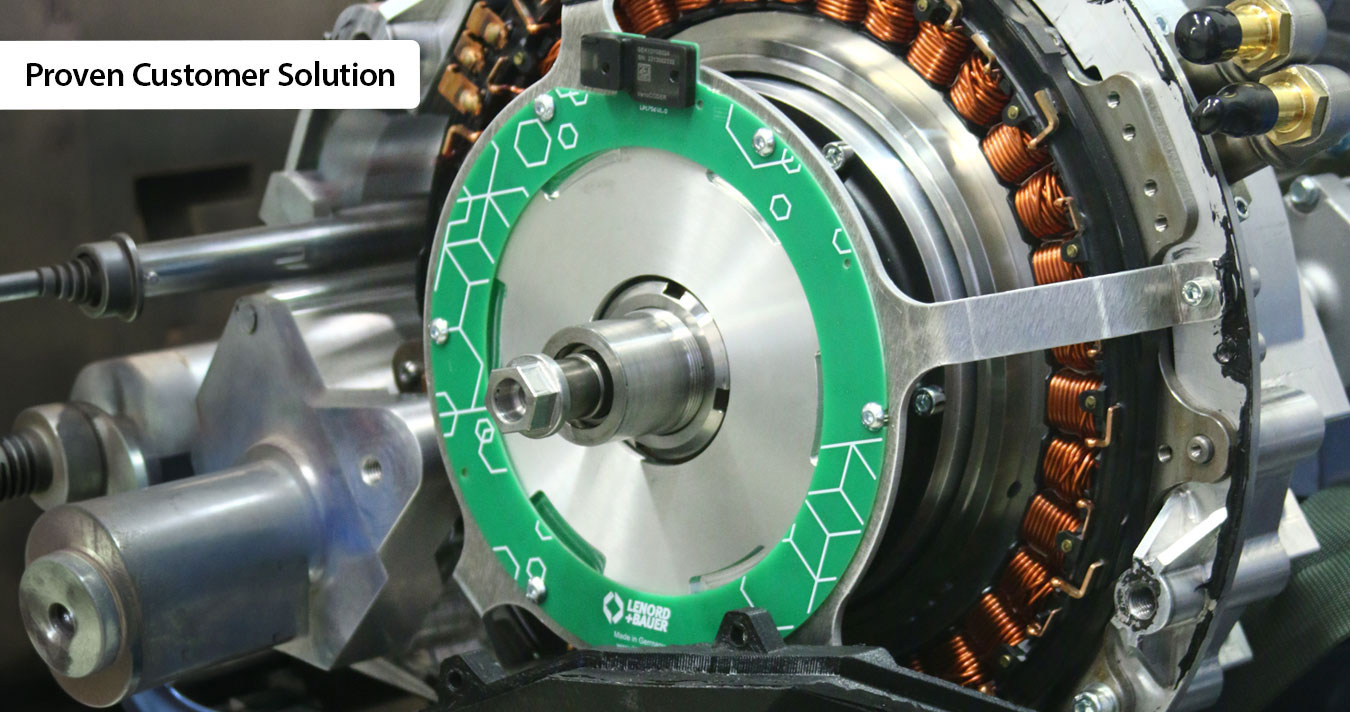
This information is critical for optimally controlling start-stop operations, load changes, and ignition timing. In parallel, rotor position encoders in the electric motor deliver the exact rotor angle for field-oriented control. Only with this angle can the inverter precisely build up the magnetic fields and ensure fast, jerk-free starting.
In hybrid operation, both sensor signals are combined to precisely synchronize torque transfers between the electric motor and combustion engine. The result is high driving comfort, maximum efficiency, and harmonious power flow.